
Deep tissue or Thai massage: which one?
You're looking at a Koh Samui spa menu and two massages sound right: deep tissue and Thai. Both promise to ease tight muscles. They're built very differently, and picking the wrong one means an hour that doesn't give you what you came for.
This guide compares deep tissue vs Thai massage on technique, pressure, how each one feels, and who each suits, then shows what both cost at Dusita Spa on Chaweng Beach Road.
The quick answer
- Choose deep tissue for specific knots, stubborn tension and slow, strong pressure on one area.
- Choose Thai massage for stiffness, flexibility and full-body release with stretching.
- Can't decide? Ask for a blend, such as our Deep Thai-Yoga Body Massage.
Deep Tissue vs Thai Massage at a Glance
| Deep tissue massage | Traditional Thai massage | |
|---|---|---|
| Main goal | Release tension in deeper muscle layers | Open up the whole body and improve movement |
| Technique | Slow, firm strokes, thumbs, forearms and elbows | Pressing, rhythmic compressions and assisted stretches |
| Oil | Usually yes | Traditionally dry, though oil versions exist |
| Clothing | Undressed to your comfort, draped with towels | Traditionally loose, comfortable clothing |
| Movement | You lie still | Therapist moves your limbs into stretches |
| Feels like | Intense, focused pressure | Rhythmic, a bit like guided yoga |
| At Dusita | Deep Tissue Body Massage, 60 min, ฿1,800 | Traditional Thai Massage, 60 min, ฿650 |
Prices from the Dusita Spa menu, checked November 2026. Confirm current rates on WhatsApp.
What Is Deep Tissue Massage?
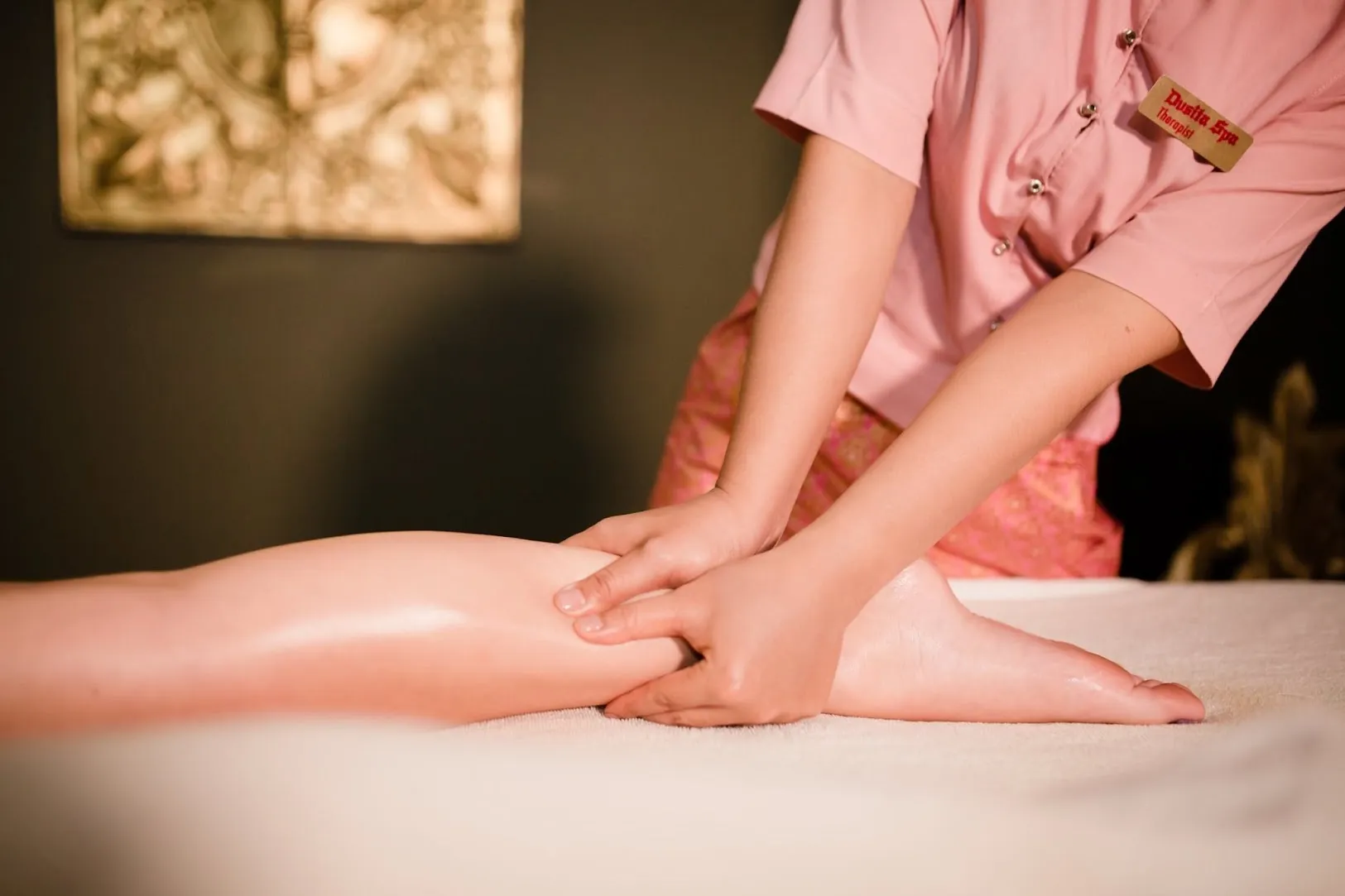
Deep tissue massage works on the deeper layers of muscle and the connective tissue around them. The therapist uses slow strokes and sustained pressure to ease areas that have tightened up, often with forearms and elbows as well as hands.
It's about depth, not speed. A good deep tissue therapist builds pressure gradually and checks in with you, because the aim is to release tension, not to win a pain contest.
What It Feels Like
Expect firm, focused pressure, with moments of "good pain" over a tight spot that settle as the muscle lets go. You stay still on the table while the therapist works section by section. Many people feel pleasantly heavy afterwards, and some are sore for a day.
Our Deep Tissue Body Massage works the deeper muscle layers to release built-up tension. It runs for 60 minutes and costs ฿1,800.
What Is Thai Massage?
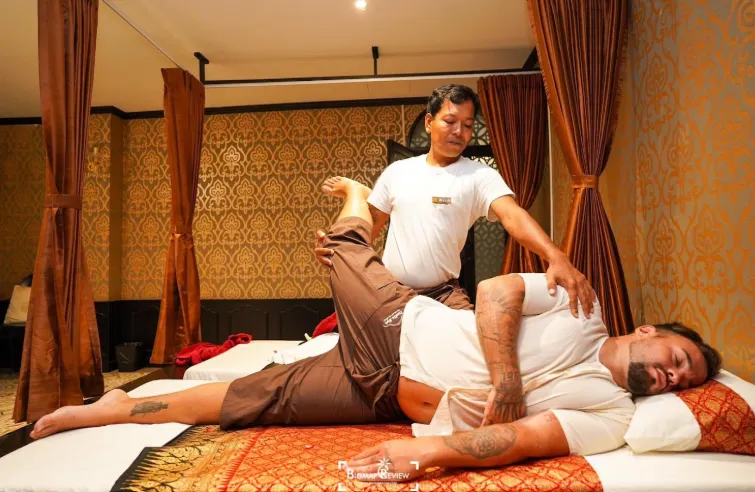
Thai massage, or Nuad Thai, is a traditional healing practice that UNESCO added to its list of intangible cultural heritage in 2019. UNESCO describes therapists using their hands, elbows, knees and feet to work along energy lines called sen, which are believed to run through the body.
In its traditional form it isn't a rub-down. Think pressing, rocking and stretching, with the therapist guiding your body through positions so you do none of the work. Many people call it "yoga without the effort".
What It Feels Like
Rhythmic and active. You're moved, pressed and stretched, so you'll feel looser and taller rather than heavy. The pressure can be strong in places, but the overall feeling is energising rather than sleepy.
Our Traditional Thai Massage is a classic dry massage combining stretching with pressure-point work, and it's the best-value hour on our menu at ฿650. You can also choose Thai oil massage (฿750) or Thai massage with warming herbal balm (฿950).
Why Thai Massage Looks the Way It Does
Thai massage grew out of village healing, royal court medicine and temple learning. Bangkok's Wat Pho became its home: according to the Thailand Foundation, King Rama III had sixty murals of therapeutic practices and eighty statues of stretching exercises put up on the temple grounds.
That heritage explains the stretching, the pressure points and the clothed, dry format. Deep tissue comes from a different tradition, closer to Western sports and remedial massage, which is why it uses oil, bare skin and sustained strokes.
What a Session Looks Like
A Deep Tissue Session
- Consultation about problem areas and how firm you like it
- Lying face down, draped in towels, with oil applied to one section at a time
- Slow warm-up strokes, then deeper pressure with thumbs and forearms
- Focus on the tight spots you mentioned, then the other side
- Gentle finish so your muscles settle
A Thai Massage Session
- Consultation, including any injuries or stiff joints
- Pressing and compressions starting at the feet and moving up the legs
- Assisted stretches for hips, back and shoulders, with your therapist guiding every move
- Pressure along the sen lines on back, arms and neck
- Slow, calming finish to your head and shoulders
Ask us at booking how your session will be set up, so you know what to wear and what to expect.
How to Choose: Match the Massage to Your Problem
Book Deep Tissue If
- You have a specific knot, such as one shoulder blade, a tight calf or a stiff lower back
- Hours at a desk or driving have left your neck and shoulders locked
- You're recovering from training or hiking and want firm, targeted work
- You like strong pressure and prefer to lie still and let it happen
Book Thai Massage If
- You feel stiff all over after flights, ferries or long days of sightseeing
- You want to feel more flexible and energised, not sleepy
- You don't love oil on your skin
- You want the most traditional Thai experience on your trip
Common Scenarios on Koh Samui
| Your day | Best pick | Why |
|---|---|---|
| Just landed after a long-haul flight | Thai massage | Stretching undoes hours of sitting |
| Hiked to a waterfall or tried a gym session | Deep tissue | Targets tired, tight muscles |
| Desk worker with neck and shoulder pain | Deep tissue, or our 30-min Office Syndrome massage at ฿650 | Focused pressure where tension builds |
| First massage in Thailand | Thai massage | The classic experience, gentle entry price |
| Joint stiffness, achy knees | Thai herbal compress, ฿1,200 | Warmth and lighter pressure |
What the Evidence Says
Be wary of anyone who promises a massage will fix a medical problem. The US National Center for Complementary and Integrative Health says evidence for low-back pain is weak, with some reviews finding short-term relief from studies of low quality. It describes benefits for neck and shoulder pain as possibly short-term too.
The same page says the risk of harm "appears to be low", but rare problems such as nerve injury and blood clots have been reported, often after vigorous massage like deep tissue or in people at higher risk of injury. It also advises against using massage to delay seeing a health professional.
What that means for you
Both styles are reasonable choices for relaxation and short-term relief from tight muscles. Neither is a cure. If you have a medical condition, an injury or take blood-thinning medication, tell your therapist first and consider asking a doctor.
Can't Decide? Try a Blend
You don't have to pick a side. Several Dusita treatments sit between the two styles:
- Deep Thai-Yoga Body Massage, 60 min, ฿1,200: Thai technique aimed at releasing muscle knots.
- Dusita Signature Massage, 60 min, ฿1,800: our own blend of aromatherapy and ancient Thai massage.
- Traditional Thai with Thai Balm, 60 min, ฿950: Thai massage with a warming herbal balm.
Tell your therapist what you want, and they can adjust pressure and technique to suit your body. Our team is trained in both approaches, and in 2024 Dusita Spa won World Luxury Awards in three categories, including Luxury Traditional Spa.
Message Dusita Spa on WhatsApp to choose your massage
Book Now WhatsApp +66 97 190 8999 · Phone 077 300 472Prices at Dusita Spa
| Massage | Duration | Price |
|---|---|---|
| Traditional Thai Massage | 60 min | ฿650 |
| Traditional Thai Oil Massage | 60 min | ฿750 |
| Traditional Thai with Thai Balm | 60 min | ฿950 |
| Deep Thai-Yoga Body Massage | 60 min | ฿1,200 |
| Deep Tissue Body Massage | 60 min | ฿1,800 |
| Dusita Signature Massage | 60 min | ฿1,800 |
Prices from the Dusita Spa menu, checked November 2026. See the full massage menu for everything we offer.
Tips for Your Session
- Say how firm you like it. Light, medium or strong, and speak up if it changes.
- Name your problem areas during the consultation so the time goes where it counts.
- Drink water afterwards. It helps, especially in Samui's heat.
- Expect a little soreness after deep tissue. Take it easy that evening.
- Keep the schedule light after either style so you can enjoy the afterglow.
- See the treatments in action on @dusita_spa on Instagram.
Book the Massage That Fits
Deep tissue targets knots with slow, firm pressure. Thai massage loosens your whole body with stretching and rhythm. Pick the one that matches your problem, or ask for a blend. Reserve your massage via WhatsApp (+66 971908999). You can also call reception on 077 300 472. Tell us your sore spots, preferred pressure and time, and we'll suggest the best fit.
Deep Tissue vs Thai Massage FAQs
Is Thai massage stronger than deep tissue?
Not necessarily. Thai massage can feel strong in places, but the pressure is rhythmic and varied. Deep tissue is more sustained and concentrated. You can ask for lighter or firmer pressure in either.
Which one is better for back pain?
Deep tissue is the usual choice for a specific tight spot, and Thai massage helps if you're stiff more generally. For ongoing or severe pain, see a doctor first.
Will I be sore afterwards?
Possibly, especially after deep tissue. Mild soreness for a day is common. Drink water and rest. Tell us if anything feels sharp rather than achy.