
If you have ever watched one of those impossibly satisfying head-spa videos online and thought, "I need that," you are not alone. The head spa has exploded from a niche Japanese salon ritual into one of the fastest-growing wellness treatments globally — and for very good reason.
Unlike a standard shampoo at the salon, a head spa is a full, multi-step therapy for your scalp, your hair, and your nervous system all at once.
This guide explains exactly what a head spa is, what happens during a session, the science behind the benefits, who it is best for — and why Koh Samui is the ideal place to finally experience one.
What Is a Head Spa?
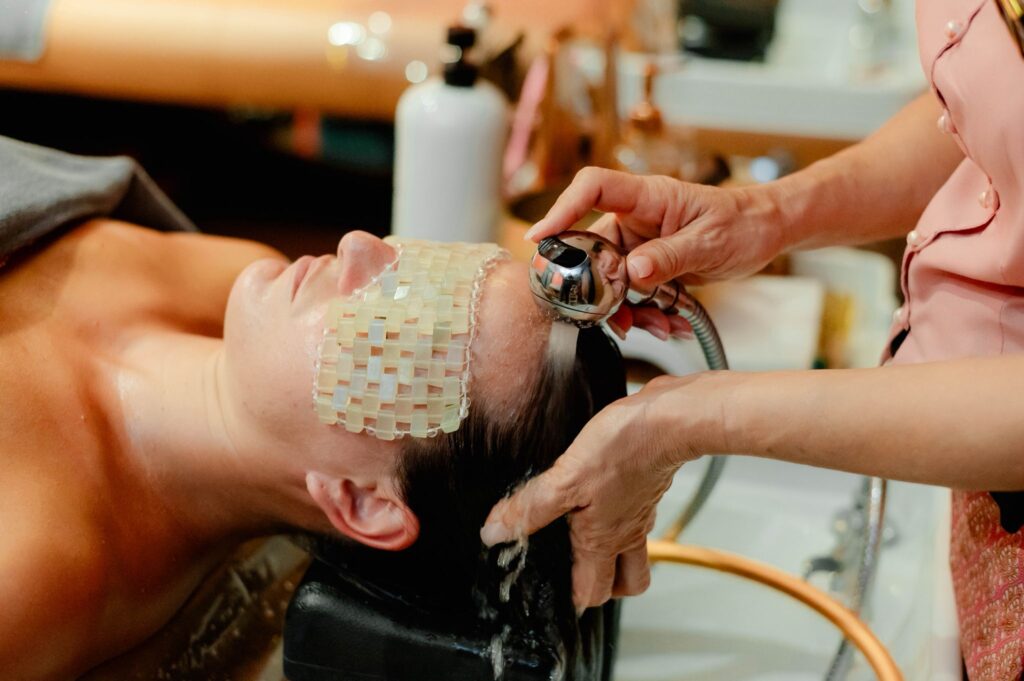
A head spa — known in Japanese as ヘッドスパ (heddo spa) — is a multi-step scalp and hair treatment that combines deep cleansing, massage, steam, and nourishing therapies to restore balance to both the scalp and the hair shaft. It originated in Japan, where the concept of treating the scalp as skin — not just a base for hair — has been practised for decades.
Think of it as a facial for your scalp. Just as a facial exfoliates, nourishes, and rebalances the skin on your face, a head spa does the same for the skin on your head: clearing built-up oils, dead cells, and pollution; improving circulation; and delivering targeted treatments straight to the follicle.
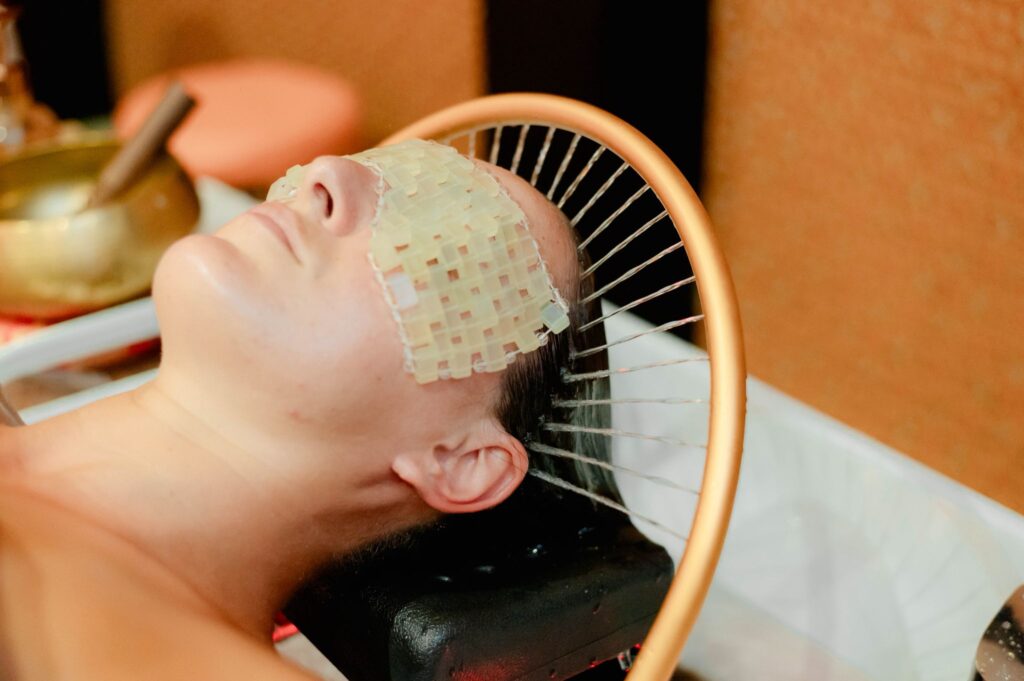
Modern head spa treatments blend traditional Japanese and Ayurvedic techniques with contemporary tools like nano-scalp steamers, ASMR sound therapy, and gua sha instruments. The result is a treatment that is simultaneously clinical and deeply restorative.
What Happens During a Head Spa? A Step-by-Step Breakdown
While every provider's menu differs, a complete head spa ritual typically follows this sequence:
- Dry scalp assessment & Ayurvedic head massage — the therapist analyses your scalp condition and begins with a dry massage using aromatic essential oil to warm up the tissue and stimulate initial circulation.
- Herbal compress or hot pack — warm herbal balls are pressed against the scalp and neck to soften stubborn build-up and relax the surrounding muscles.
- Scalp scaling — a gentle exfoliating treatment removes dead skin cells, excess sebum, and product residue from the scalp surface, clearing the way for nutrients to reach the follicle.
- ASMR sound therapy — a signature technique using gentle tapping, sensory claw massage, and ambient sound to shift the nervous system into deep relaxation. Widely shared online as the most mesmerising part of the experience.
- Bubbly shampoo & deep conditioning — the scalp is thoroughly washed twice, then conditioned with a treatment mask suited to your hair type.
- Steam or nano-steamer application — steam opens the hair cuticle and allows conditioning ingredients to penetrate fully, rather than sitting on the surface.
- Scalp acupressure — precise pressure on key points helps relieve tension, stimulate lymphatic flow, and improve blood delivery to the roots.
- Gua sha & facial massage — many full-format head spas include a lymphatic facial massage and gua sha to lift, depuff, and increase facial circulation.
- Fresh aloe vera hair mask — raw aloe is applied to nourish the scalp and seal moisture into the hair shaft.
- Blow dry & styling finish — the session closes with a professional blow-out, leaving hair silky, smooth, and refreshed.
The Science-Backed Benefits of a Head Spa
Head spas are not simply a pampering trend — the benefits are grounded in trichological research (the scientific study of hair and scalp health). Here is what the evidence shows:
| Benefit | What It Means for Your Hair & Body |
|---|---|
| Boosts hair growth | Scalp massage increases blood flow by up to 25%, pushing follicles from the resting phase into the active growth phase. |
| Deep cleanses follicles | Removes months of sunscreen, salt, product build-up — critical in a tropical climate like Samui. |
| Reduces hair fall | Mechanical stimulation strengthens dermal papilla cells at the base of each follicle, signalling thicker strand production. |
| Relieves scalp inflammation | Cooling and soothing ingredients calm redness, itchiness, and sunburn-related scalp stress. |
| Eases headaches & tension | Head, neck, and shoulder massage deactivates the sympathetic nervous system, lowering cortisol levels. |
| Improves hair texture | Deep conditioning and steam open the cuticle, allowing nutrients to penetrate each strand — not just coat it. |
A landmark study published in the journal Eplasty (Koyama et al., 2016) demonstrated that participants who received standardised scalp massage for just four minutes a day showed measurable increases in hair thickness over 24 weeks. The mechanism: massage stretches the dermal papilla cells at the base of each follicle, signalling them to produce thicker hair strands.
Beyond the follicle, the relaxation effect is equally significant. The combination of rhythmic massage, warm compresses, and sound therapy activates the parasympathetic nervous system — the "rest and digest" mode — which reduces cortisol. High cortisol levels are directly linked to hair loss, so the relaxation component of a head spa is not merely pleasant; it is therapeutic.
Who Should Get a Head Spa?
A head spa is appropriate for almost anyone, but it is especially beneficial if you experience any of the following:
- Increased hair fall or thinning hair
- Oily scalp or persistent dandruff
- Dry, itchy, or flaky scalp — particularly common after sun exposure
- Product build-up from styling sprays, dry shampoo, or heavy conditioners
- Frequent headaches, neck tension, or "office syndrome" symptoms
- Stress-related hair loss (telogen effluvium)
- Dull, brittle, or damaged hair from heat styling or colouring
For travellers on Koh Samui, there is an additional, often overlooked reason: the island environment is hard on hair. Salt water, chlorine, intense UV radiation, and high humidity create the perfect storm for scalp congestion, frizz, and breakage. A mid-holiday or post-trip head spa can essentially reset the damage.
Koh Samui Head Spa: What to Expect at Dusita Spa
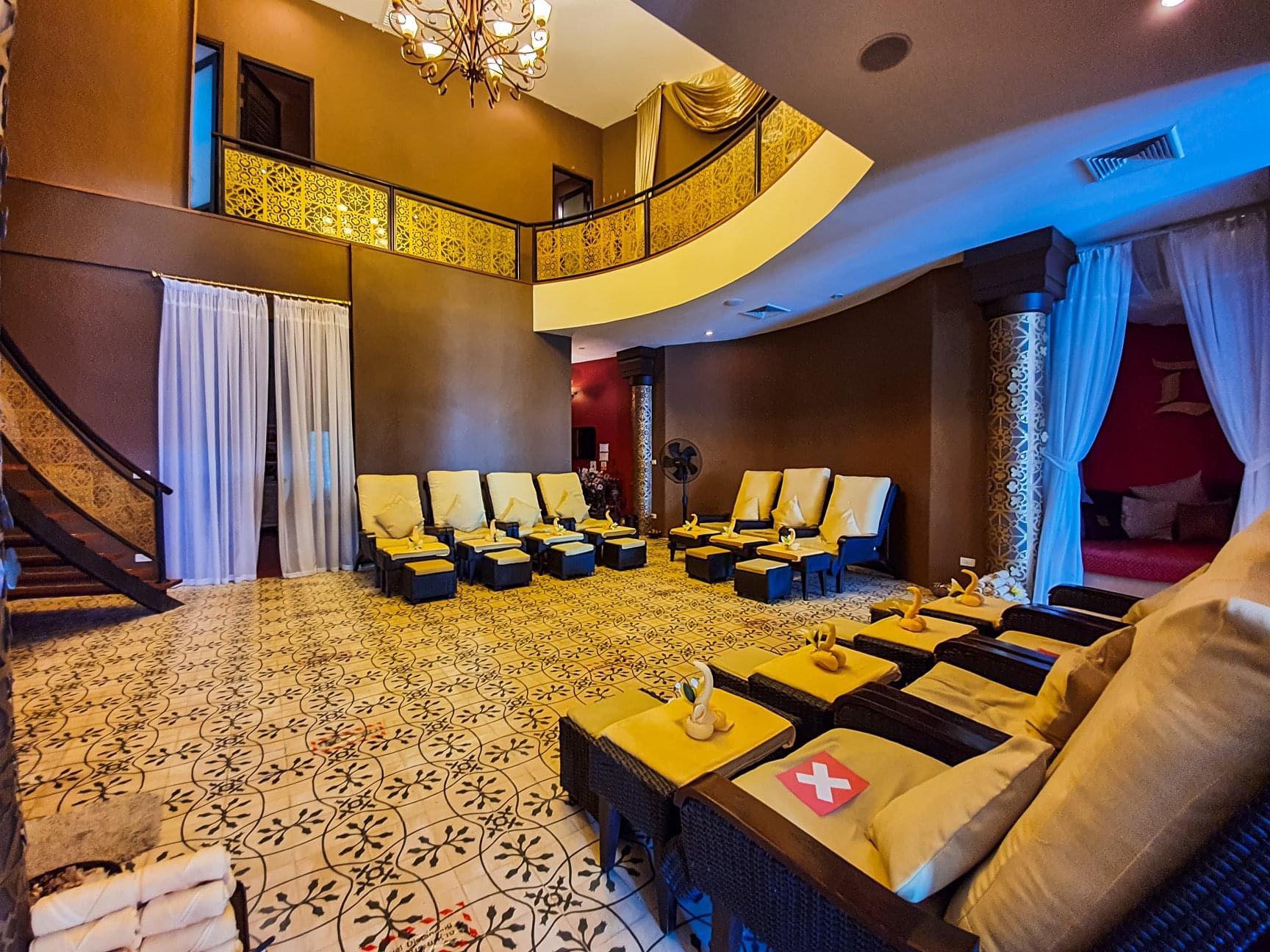
Koh Samui has no shortage of spas, but finding a genuinely dedicated head spa experience — rather than a quick scalp massage bolted onto a regular treatment — is harder than it sounds. Dusita Spa, located at Chaweng Beach, has made the head spa its signature differentiator.
Branded as Head Spa Rituals by Dusita, the programme draws on Japanese scalp care technique, Ayurvedic dry head massage, and ASMR-inspired sensory therapies that have earned it a reputation as the island's most immersive head spa experience. Each session includes facial massage, hot stone therapy for the hands and feet, and a professional blow-out — making it a full-body reset in a single appointment.
Because head spa sessions accommodate only eight clients at a time, the environment is intimate and unhurried — a genuine departure from the conveyor-belt spa model common in tourist areas.
The Two Head Spa Packages at Dusita
Dusita currently offers two head spa formats, both available at Dusita Spa 2 (arrive at least 10 minutes before your scheduled time):
| Package | Head Spa with Water & Sound | Ultimate Head Spa ★ |
|---|---|---|
| Format | Classic entry-level | Full hero treatment |
| Price | Contact for current rate | ฿2,500 THB |
| Duration | — | 80 minutes |
| Scalp Scaling | ✓ | ✓ |
| ASMR Sound Therapy | ✓ | ✓ |
| Hair Wash & Blow Dry | ✓ | ✓ |
| Ayurvedic Dry Head Massage | – | ✓ |
| Herbal Hot Compress | – | ✓ |
| Gua Sha Lift & Facial | – | ✓ |
| Fresh Aloe Vera Hair Mask | – | ✓ |
| Hands & Foot Hot Stone | – | ✓ |
| Best For | First-timers & quick refresh | Deep reset & full ritual |
Head Spa vs. a Regular Shampoo: What's the Difference?
A standard in-salon shampoo takes five minutes, uses a single product, and focuses on the hair shaft. A head spa takes 45–80 minutes, uses multiple targeted products and tools, and focuses on the scalp as skin. The difference is analogous to splashing your face with water versus having a professional facial.
Regular shampoo addresses surface dirt. A head spa addresses the follicle environment — the soil in which your hair grows. It removes the build-up that sits in pores and around follicle openings, which no amount of regular washing can reach. The added massage, steam, and ASMR elements turn the treatment into something that benefits the nervous system as much as the hair itself.
How Often Should You Get a Head Spa?
For most people, a head spa every three to four weeks is ideal for ongoing scalp maintenance. If you are dealing with active hair fall, oiliness, or significant build-up — for example, after several weeks on a tropical island — an initial intensive course of two sessions closer together can accelerate results.
For travellers visiting Koh Samui, a single session mid-holiday or before your flight home is one of the most efficient ways to arrive back with noticeably healthier, shinier hair.
Frequently Asked Questions
Ready to Try the Island's Best Head Spa?
A head spa is one of those treatments that sounds indulgent until you understand the science — and then it becomes non-negotiable. It is an investment in your scalp health, your hair quality, and your stress levels, all in a single appointment. On Koh Samui, where the sun, salt, and heat are constantly working against your hair, it is arguably less of a luxury and more of a necessity.
Dusita Spa's Head Spa Rituals are available now at Chaweng Beach. Explore the full range of treatments and browse guest experiences on TripAdvisor, or follow the latest updates on Instagram @dusita_spa and Facebook.